At a Glance
Situation
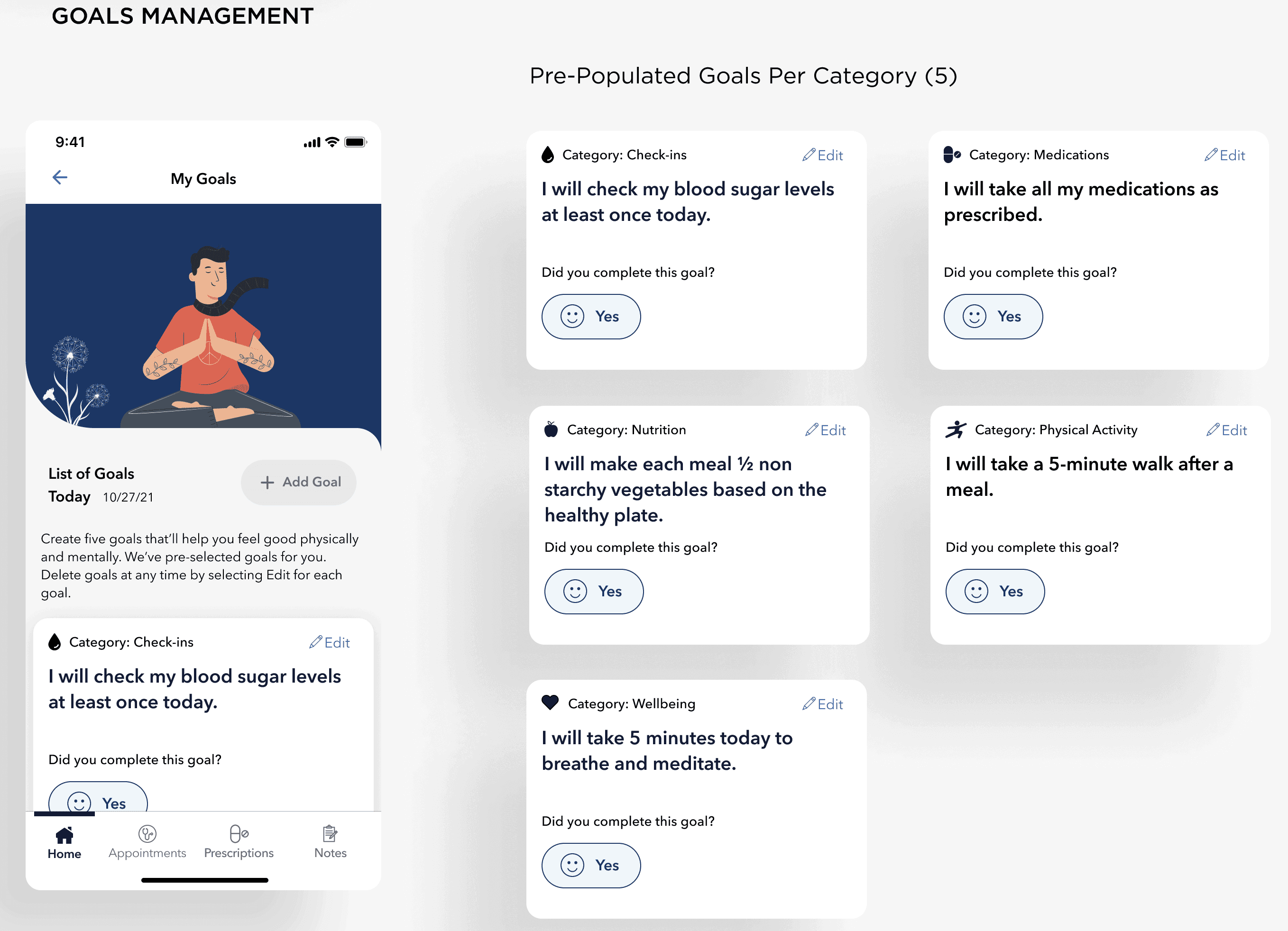
A vendor-built diabetes management pilot had stalled, with low engagement, high abandonment, low CSAT, and weak adherence to recommended treatment.
I took ownership, established a baseline, spoke directly with patients, and reframed the choice from patching the existing app to rebuilding a smaller, higher-value MVP.
A close cross-functional team brought together UX design, research, clinicians, patients, Engineering, Product, and a clinical psychologist using an SVPG-inspired product operating model.
The redesigned pilot launched later that year, increasing engagement and CSAT, reducing abandonment, and improving treatment adherence by 20%+ among app participants.
The Challenge
Kaiser Permanente had commissioned a vendor to build a pilot mobile application for diabetes condition management. The intent was strong, but the experience was not producing the behavior or satisfaction the program needed. Engagement had stalled, abandonment was high, CSAT was low, and adherence to clinically recommended treatment remained weak.
When I took over the initiative, the question was not simply how to improve screens. We needed to determine whether the existing product was worth continuing to invest in, what patients actually needed from the experience, and how to improve both the user experience and the clinical outcome without allowing sunk cost to drive the decision.
My Mandate
CORE LEADERSHIP DECISION
How I Approached It
Put patients into the decision process
I spoke directly with end users to understand where the experience created friction, where people disengaged, and which parts of condition management felt most difficult to sustain. Those conversations helped us separate feature requests from the underlying problems patients needed the product to solve.Reframe the investment decision
The evaluation showed that retrofitting the existing application would require more time and resources than rebuilding a smaller product around the core value proposition. I brought that tradeoff to stakeholders and leadership and secured alignment to move forward with a scaled-down MVP rather than continue patching the existing pilot.Build a genuinely multidisciplinary product team
We used the Silicon Valley Product Group (SVPG) operating model as a guide and formed a close working team across UX design, research, clinicians, patients, Engineering, Product, and a clinical psychologist. The point was not simply representation. It was to keep product, clinical, technical, behavioral, and patient perspectives in the same decision loop from discovery through delivery.Design for value first, then scale
The team worked together to scope, design, and build the MVP around the highest-value interactions. We deliberately kept the first release focused instead of recreating the full feature set. At the same time, we designed the product so the approach could become a template for additional condition-management experiences rather than a one-off diabetes solution.Launch and measure against the same baseline
The redesigned pilot was released later that same year. After launch, we returned to the same categories we had baselined at the start so the team and leadership could assess whether the new product was actually changing behavior and satisfaction.
Results
We re-sampled the same categories used in the baseline so the team could compare the new experience against the original state.
Measure
Before
After
Engagement
Stalled / Low
Higher engagement after the redesigned pilot launched
Abandonment
High
Lower abandonment
CSAT
Low
Higher customer satisfaction
Treatment adherence
Low
20%+ increase among app participants
Scalability
Single vendor-built pilot
Designed as a reusable template for additional condition-management experiences
Why the Approach Worked
What I Learned
LEADERSHIP TAKEAWAY