
All case studies
Case Study · Operative · Kaiser Permanente
Executive Accessibility Operating System
Most companies treat accessibility as a late QA checklist — expensive, reactive, and invisible to leadership. Across Operative and Kaiser Permanente, I turned it into something executives can fund, govern, and measure, then codified the playbook into an executive workshop.

Role
VP, Product Design (Operative) · Director, Mobile Design & UX (Kaiser Permanente)
Initiative
Executive Accessibility Operating System: VPAT/ACR, design-system governance, and training
Scope
5 enterprise product lines + a 12M+ member healthcare ecosystem
Organization
Design, Product, Front-End Engineering + QA, with Sales for RFPs
Geography
North America + EMEA
The 15-second version
The story at a glance
1st
Public Accessibility Conformance Report (VPAT/ACR) in Operative’s history
400+
Employees trained in WCAG and inclusive design at Kaiser Permanente
5
Roles with explicit accessibility ownership, from CEO to QA
01 The situation
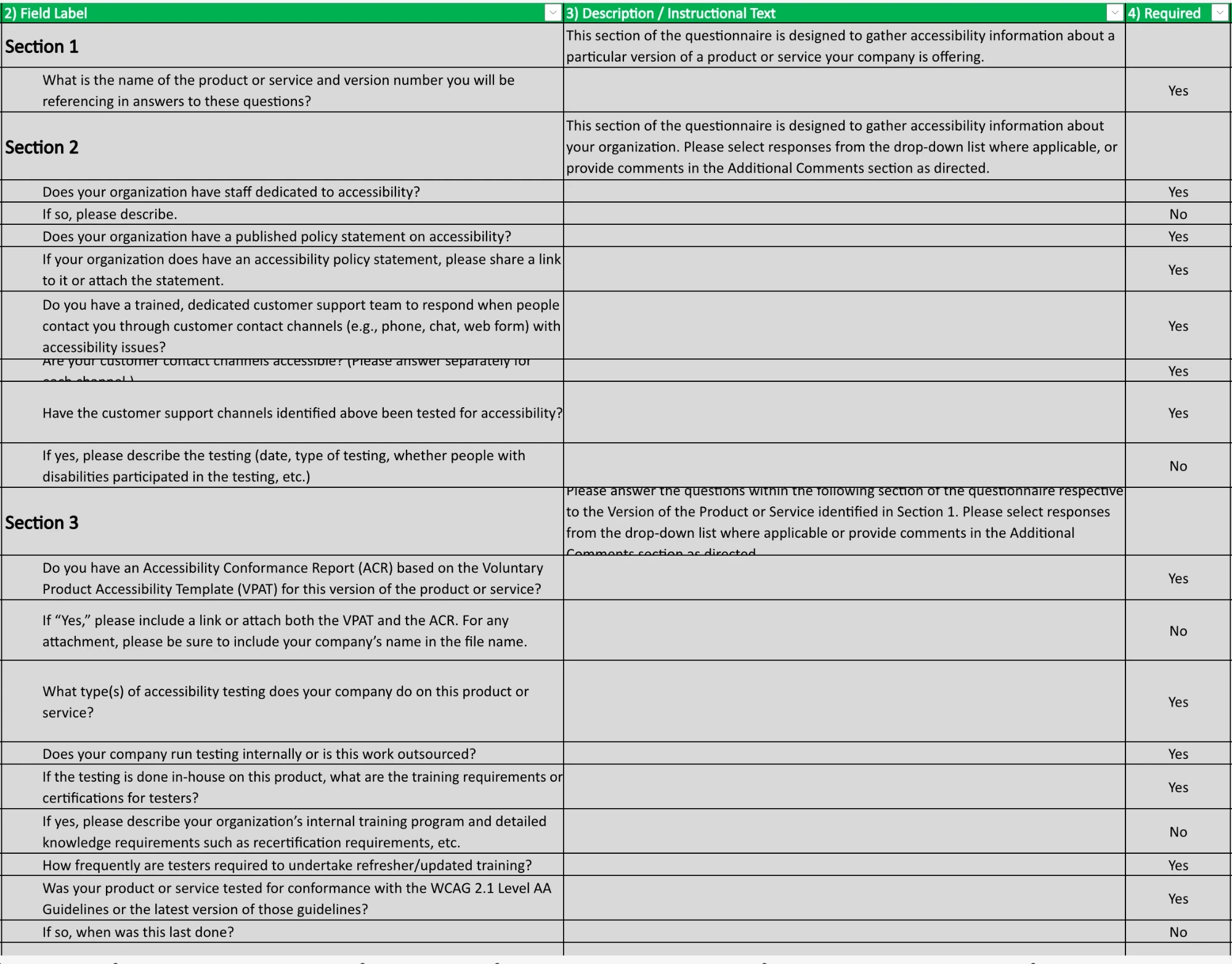
Enterprise buyers were asking for VPATs and WCAG conformance in RFPs, accessibility compliance across Operative’s portfolio was weak, and fixes arrived late — one screen and one defect at a time.
02 My move
I reframed accessibility from a compliance task into an operating model: a WCAG AA baseline, accessibility built into the design system, automated and manual testing, clear ownership by role, and reporting leaders could act on.
03 The outcome
Operative published its first public Accessibility Conformance Report, strengthening enterprise RFP readiness. Accessibility became part of the shared design language and AI-assisted review, and the model became the Executive Accessibility Operating System workshop.
The pivotal decision
Instead of auditing every screen and fixing defects one by one, I put accessibility where it scales: into the design system, so new components ship accessible by default, and into procurement, so Sales had conformance documentation enterprise buyers could trust.
The full story
For those who want the detail
Chapter 01
The challenge
Accessibility usually reaches leadership as a legal scare or a late bug list. Neither builds lasting capability. At Operative, five enterprise products ran on different stacks with weak accessibility compliance, while enterprise buyers increasingly expected a VPAT and WCAG conformance claims before they would shortlist a vendor.
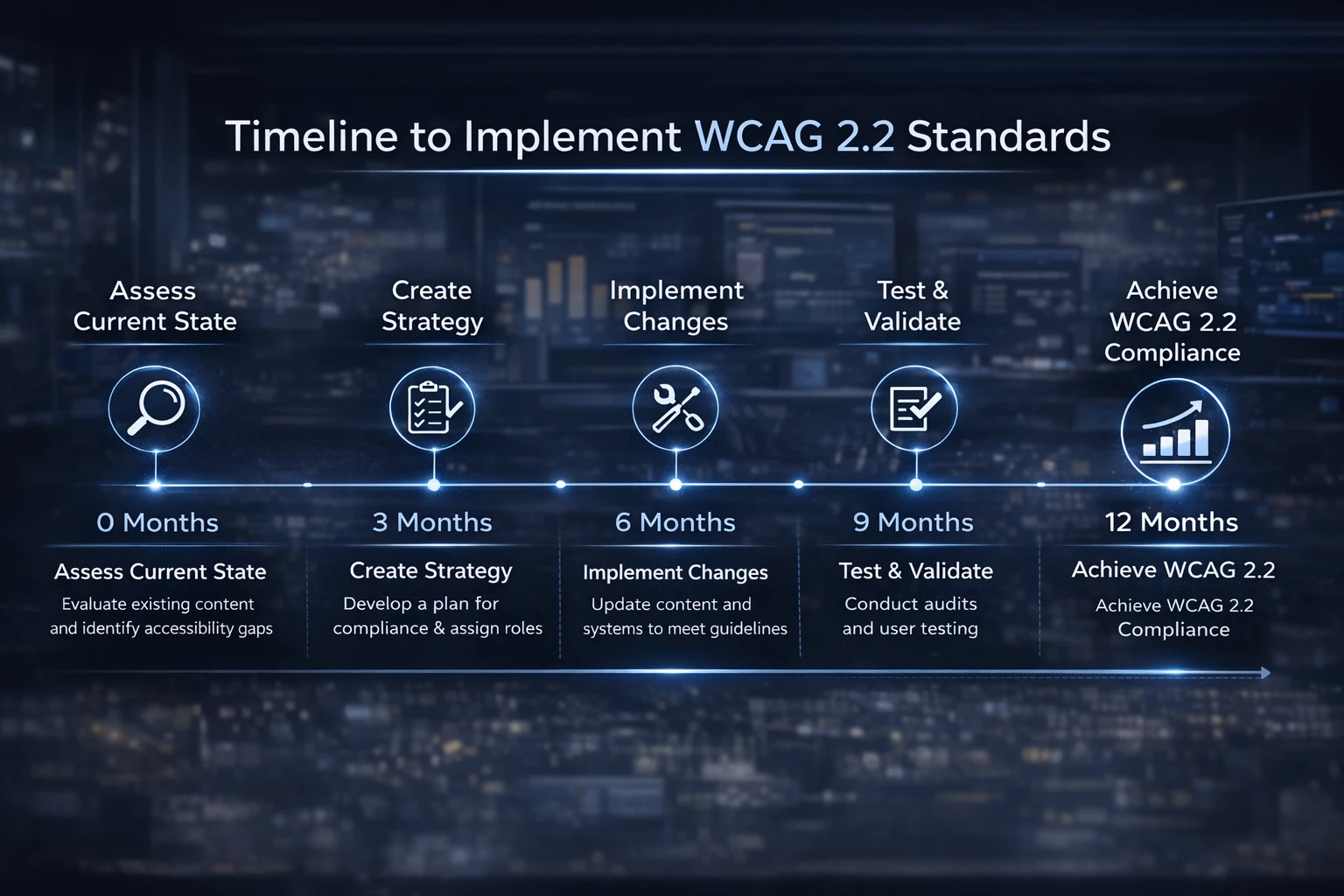
The external pressure keeps rising. UsableNet tracked U.S. website accessibility lawsuit filings climbing from 4,630 in 2023 to 4,975 in 2024, with 2025 on pace for roughly 20% more. WCAG 2.2, published in October 2023, raised the bar on focus visibility, target size, and accessible authentication.
The real problem was ownership. When accessibility belongs only to QA or a single specialist, it shows up too late and costs the most to fix.
Chapter 02
My mandate
Make accessibility something executives could fund, govern, and measure — not a specialist’s side project — while getting Operative’s portfolio ready for enterprise procurement.
The team model
A cross-functional working group across Product Design, Product Management, Front-End Engineering, and QA, with Sales looped in so conformance documentation answered real RFP questions.
Chapter 03
How I approached it
01
Set one standard everyone can point to
I made WCAG AA the baseline (now WCAG 2.2) and translated each success criterion into its business risk and a governance standard — keyboard operability, visible focus, contrast, reflow, target size, and accessible authentication — so leaders could see what was at stake, not just what failed.
02
Build accessibility into the design system
Accessible patterns moved into the shared design language and component standards: contrast tokens, focus states, target sizes, and semantic structure. Every team that reused a component inherited the fix instead of rediscovering the problem.
03
Test automatically and by hand
Automated checks catch common failures early; keyboard and screen-reader validation catches what tools miss — a practice I’ve used since Section 508 work with JAWS at Sun Microsystems and Oracle. At Operative, AI-assisted audits flagged issues earlier, with people owning the final call.
04
Give every role explicit ownership
CEOs set the vision and fund remediation; product leaders write accessibility acceptance criteria and OKRs; designers own accessible components; engineers own semantic code and keyboard support; QA owns validation and regression. Accessibility stopped being someone else’s job.
05
Publish, train, and speak up
We delivered Operative’s first VPAT and public Accessibility Conformance Report to support enterprise RFPs. At Kaiser Permanente, I delivered WCAG and inclusive-design training to 400+ employees, and I shared the approach as a speaker at the 2019 CSUN Assistive Technology Conference.
Chapter 04
Results
Accessibility moved from a late, reactive fix to a governed capability. Where client-level data is confidential, results are shown directionally.
Conformance documentation
None published
First public VPAT / Accessibility Conformance Report (Operative)
Enterprise RFP readiness
Ad hoc answers
Documented conformance for buyers and Sales
Design system
Fixed screen by screen
Accessible patterns shared across five products
Accessibility compliance
Low
Higher compliance after the portfolio refresh, with a roadmap for more
Review workflow
Late manual reviews
Earlier AI-assisted audit flags + human escalation
Organizational capability (Kaiser)
Specialist knowledge
400+ employees trained in WCAG and inclusive design
Chapter 05
Why it worked
Business language, not just compliance language
Translating success criteria into risk, revenue, and procurement made accessibility a leadership decision rather than a QA request.
Fix once, inherit everywhere
Putting accessibility into the design system meant each fix scaled across five products instead of one screen.
Ownership by role
Clear responsibilities from CEO to QA closed the “someone else will catch it” gap.
Documentation that sells
A public conformance report turned accessibility into something Sales could put in front of enterprise buyers.
Chapter 06
What I learned
Accessibility programs stall when they live only in QA. Put them in the design system and the roadmap, where they scale.
Executives fund what they can measure. Track accessibility like any other quality signal: compliant components, open defects, and keyboard failures.
Permanent, temporary, and situational limitations affect nearly everyone, so inclusive design expands your market rather than serving a niche.
Accessible, semantically structured products are also easier for AI and automation to understand — the same discipline supports AI readiness.
Chapter 07
The system, visualized


Leadership takeaway
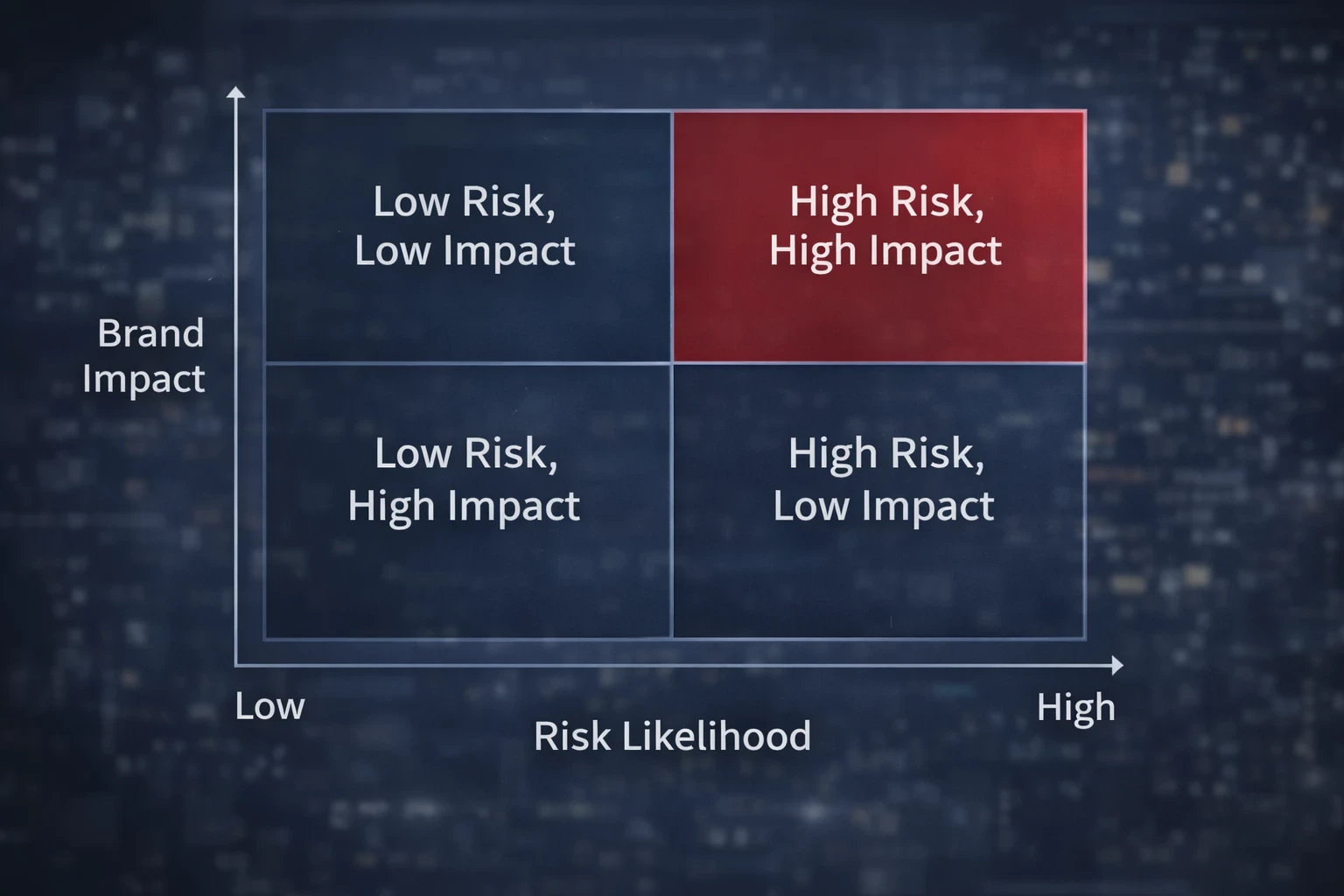
Accessibility isn’t a feature or a checklist. It’s an operating system for quality — risk, revenue, brand, and AI readiness — and it only scales when leaders own it, the design system enforces it, and every role knows its part. That’s the playbook I codified into an executive workshop and bring to every design organization I lead.