Healthcare Experience at Scale
Healthcare
2020
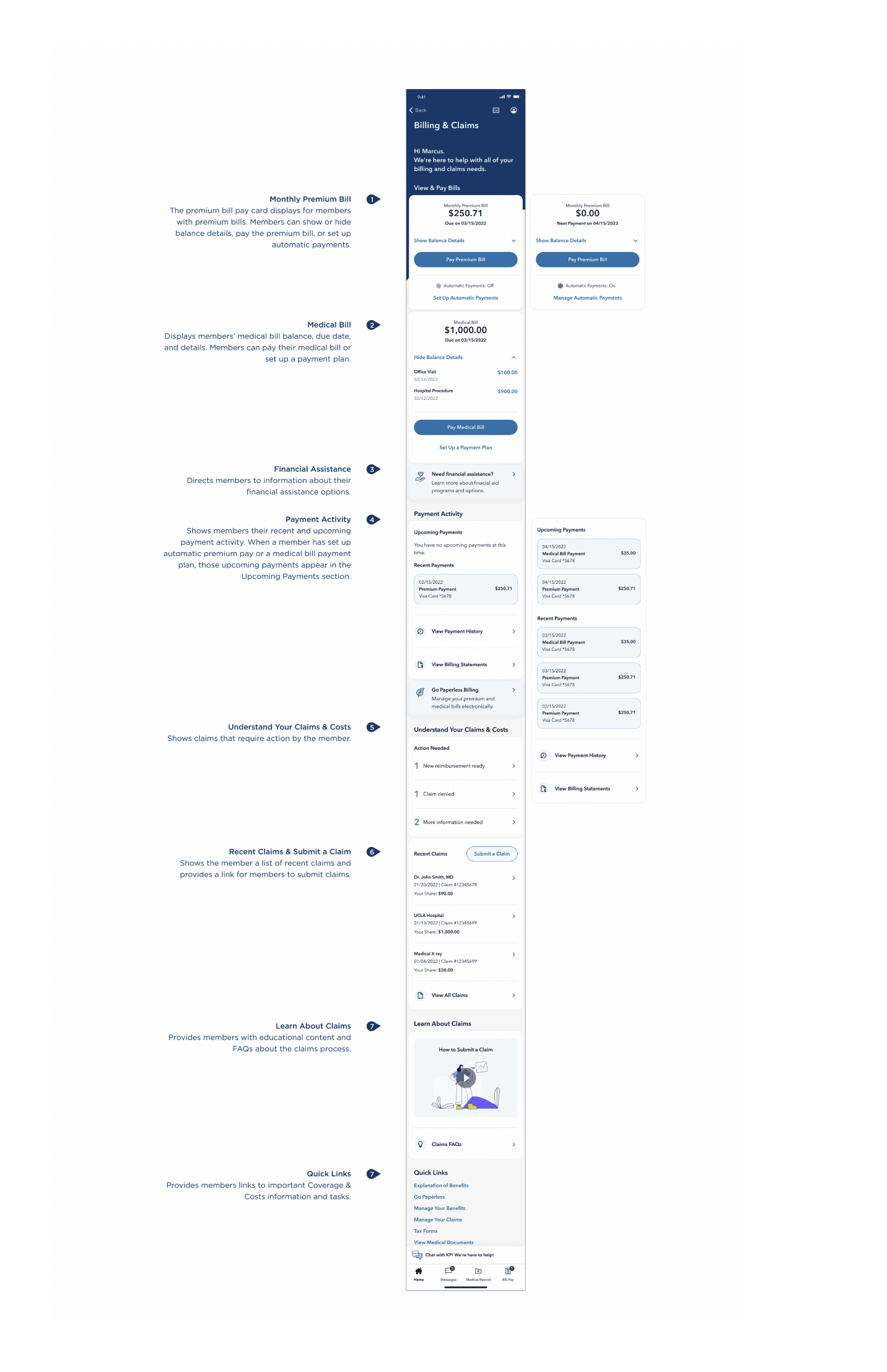
Healthcare Experience at Scale Director, Experience Design · Director, Mobile Design & UX · Lead UI/UX Mobile Designer Modernizing digital healthcare experiences and the design organization behind them—connecting customer evidence, product strategy, accessibility, design systems, and cross-functional delivery across an ecosystem serving more than 12 million members. Healthcare · Product Design Leadership · Mobile · Design Systems · Accessibility The Challenge Healthcare experiences sit at the intersection of complex systems, high-stakes decisions, accessibility requirements, clinical workflows, and very different user needs. Across Kaiser Permanente’s digital ecosystem, the opportunity was larger than improving individual screens or products. Design needed to operate more consistently across member journeys, mobile experiences, research, content, service design, and Product and Engineering delivery. At the same time, the organization needed stronger ways to connect customer evidence to product priorities and scale quality across a very large healthcare ecosystem. The Leadership Question How could Design improve customer experience at scale while making quality, accessibility, and evidence part of everyday product delivery? The Transformation I focused on four connected areas of leverage. 01 — Organization Individual Teams → Multidisciplinary Experience Leadership Co-led a 60+ person Product Design and Experience organization spanning Product Design, UX Research, Content, and Service Design and supporting more than 12 million members. The focus was not simply increasing design capacity. It was creating stronger alignment across disciplines and giving teams clearer ways to connect customer needs, product priorities, and business outcomes. Principle: Align the organization around the experience, not the org chart. 02 — Experience Individual Products → Connected Healthcare Journeys Led mobile Product Design strategy and experience modernization across Kaiser Permanente’s enterprise mobile ecosystem, improving consistency, accessibility, product quality, and the overall member experience. That work contributed to improving the mobile app’s App Store rating from 3.8 to 4.5 while creating stronger patterns for how teams designed and delivered digital healthcare experiences. The broader goal was to simplify complex healthcare journeys rather than optimize isolated interfaces. 03 — Delivery Late Design Handoffs → Integrated Product Collaboration Strengthened DesignOps, prototyping, design QA, design systems, and Product/Engineering workflows so teams could test ideas earlier, reduce avoidable rework, and make experience quality part of delivery. Earlier customer involvement, clearer standards, and stronger cross-functional collaboration helped improve design and engineering cycle time by more than 20% during the Director period. The operating model also created a stronger connection between Design, Product, Engineering, Operations, Research, and clinical stakeholders. 04 — Evidence & Accessibility Assumptions → Customer and Clinical Evidence Connected customer insight, analytics, experimentation, accessibility, and clinical evidence more directly to product decisions. This included expanding inclusive-design and WCAG practices, training 400+ employees, and helping accessibility move from a late-stage check toward an everyday product-design responsibility. A stalled diabetes mobile initiative was also reset around patient and clinician evidence, helping increase treatment adherence by more than 20% among app participants. Principle: Evidence over opinion. Accessibility by design. Impact at a Glance Across the broader healthcare transformation: 12M+ Members supported across the digital experience ecosystem 10%+ Increase in CSAT helped through stronger customer collaboration and experience prioritization 20%+ Improvement in design and engineering cycle time 3.8 → 4.5 App Store rating following mobile experience modernization Additional work included reducing mobile UI defects and release time by 22%, increasing patient satisfaction 8.6% through mobile navigation and in-facility experiences, and co-creating Stroke Alert, which improved clinical response accuracy by 10%. The broader modernization period also contributed to Webby People’s Voice and Fast Company Design Company of the Year recognition.